

Wrong Questions
Avoid getting trapped into a false model of what it means to design

I recently saw another “state of design” report recently released. Designers — particularly Graphic or UX (user experience) designers — seem obsessed with these kinds of things.
There is a level of combined insecurity and bravado within the field of design that is one of the fundamental barriers to people engaging with it.
If you’re creating things with care and attention, you're designing. You don’t need any report to tell you what the state of things is.
When I started to embrace design as a practice and craft, I decided to take in as much learning as I could. I signed up for meet-ups, conferences, networks, association memberships and anything I could find. My aim was to learn more about what it meant to be a designer.
I went back to school, earned a graduate degree in design, and still felt I wasn’t able to connect with the field the way I wanted to.
At times, I felt like a fraud. At the very least, I felt that I didn’t belong in the field of design.
I couldn’t square my experience and understanding of what design was and could be with what I was hearing from “real designers.”
When I started studying psychology, I did the same thing as I did with design. I sought out everything I could to help me understand what it was, how it was practiced, and the field's culture. But the difference with professional psychology was that it was both humble and less concerned about what the world thought of it. It had already undergone the same angst that design was (is) undergoing. It wasn’t until 1969, when the incoming American Psychological Association president George Miller proclaimed that psychology should be “given away” .
Until then, psychology was within the purview of professional psychologists, taught exclusively in universities and specialized institutions, and the field's language and nomenclature were largely inaccessible, opaque, and hidden from public view. Miller’s call changed that. Soon after, we started to see books published for public consumption. Then videos, training programs, retreats, and short courses formed an entire self-help industry, and an appetite for learning psychology and behavioural science more broadly emerged. Not all of this expanded content was useful, factual, or helpful, but much was.
It expanded the discourse on the mind, management theories, and mental health. It inspired TED Talks, behavioural design, and popular entertainment shows like Shrinking (which aren’t realistic at all but nevertheless speak some ‘psychology’ through their discourse). It also expanded how we talk to each other, relate to each other, and understand ourselves.
Like every mass change, it has had a mix of effects within society (e.g., pop-culture, social media-propelled, therapy-speak is often ill-informed, inaccurate, and misleading). But for every time someone says that they are being “gaslighted”, “triggered”, or calls someone a “narcissist” inaccurately, there is someone who is genuinely getting in touch with their thoughts and emotions, maybe seeking help when they wouldn’t have otherwise, and being more connected to others through language.
Design faces the same challenges with similar opportunities to make a positive difference.
Design Will Change The World (No It Won’t)
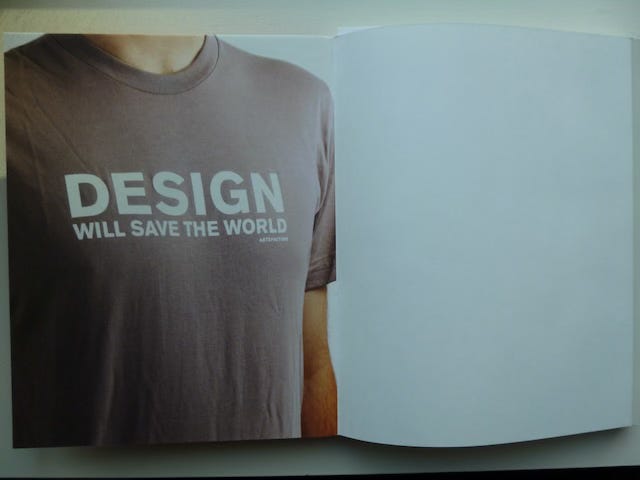
Among the more arrogant statements I’ve heard many times from designers is that design will save/change the world. “Changing the world” has been a mantra of designers for two decades.
It’s true: only through design will we address the issues we face as a species through our actions.**
(** - but it’s not just design and not just designers that do it)
It’s our actions — practices, policies, products, and systems —that make much of the world we live in. These are all designed — even if done badly, carelessly, or with ill intent. Everything else happens to us. We can’t design earthquakes, but we can design how we prepare for, detect, respond to, and manage their effects. Likewise, viruses, the effects of human aging, learning, joy or grief. We can design for collaboration, creativity, and health.
We can design for these things. We can change the world.
But this isn’t how this term is used. It’s done — as I often interpret it as (which means I could be wrong) — as a statement of intent and value: Designers change the world, so you'd better respect us.
But this is talk. Designers make great things, and terrible things, too. The state of design reflects an arrogance that design is a particular thing, style, creative tool, or application. It’s all of it and more. No one owns it. It is, in practice, like psychology: something that belongs to all of us.
There are still designers who don’t believe this, or at least want to tell us what the state is and why we should listen to them.
I created The Design Loft because I believe we are all designers, that design practice is important and necessary to address many of the issues we face as organizations in improving the health of the world (yes, the whole world), and, because of that, we should do it to the best of our ability. I want to promote design so that people who want to make a difference can do it and do it well.
It follows what design scholar, educator and brand innovator Debbie Millman says on her podcast:
We can talk about making a difference, we can make a difference, or we can do both.
Design can change the world if we don’t get ahead of ourselves. It’s more than graphic design, UX, architecture, and branding. It’s all of it. It’s also about services and systems, too. I was a designer before I got admitted to the club.
Interestingly, now that I’ve been a professor of design for over 10 years, have practiced it for 25 years, published on strategic design, and developed some of the most widely used e-Health assessment materials worldwide, I’m still not in that club. I’m OK with that. To endorse what Groucho Marx once said about club membership, I’m not looking to be in that kind of club.
The state of design is what we make it. Asking a question about what the state is, when it’s so much more than graphic design and UX, is the wrong question.
You belong in design. This is our collective field of practice.
If we create, show courage, and put our work out there with thoughtfulness, care, and attention, we will make things better by making better things.